
Skip Navigation

Wind Energy Projects

ChanceMorgan
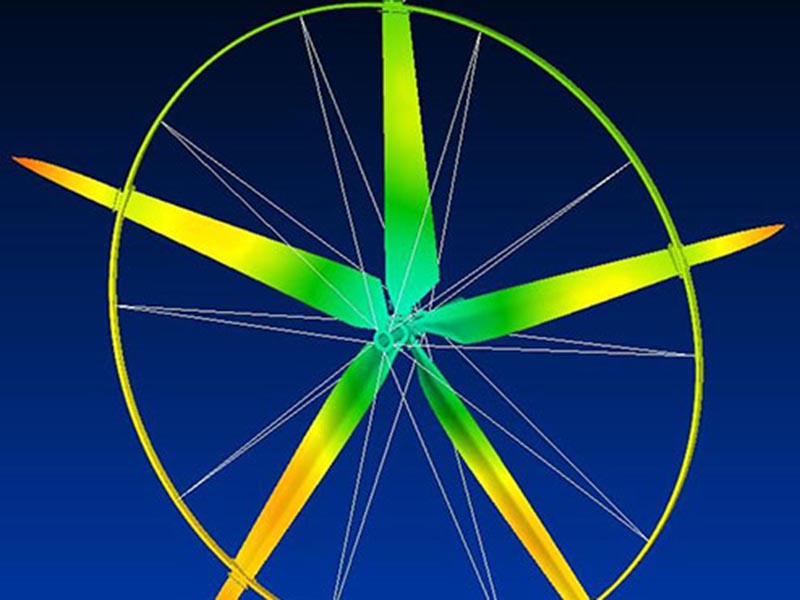
Finite Element Analysis (FEA) showing maximum deflection of the Windwheel.
SkyDrill
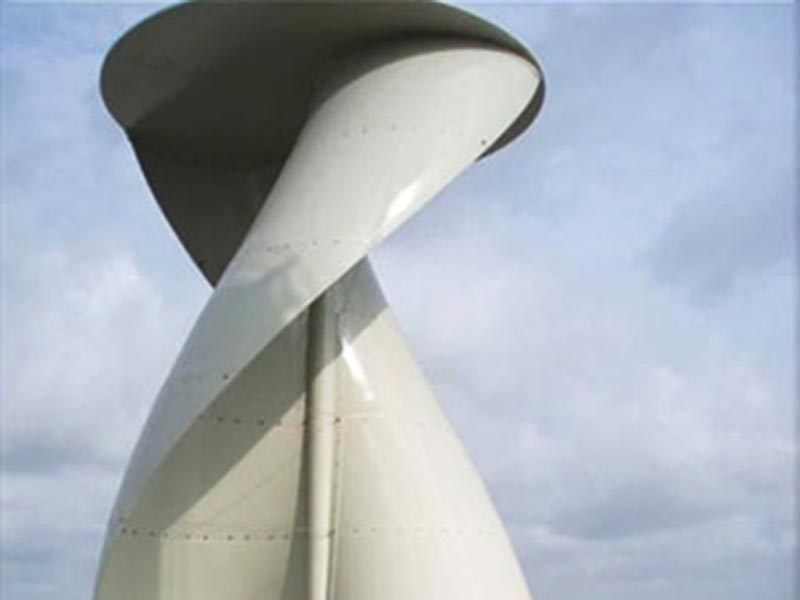
Finite Element Analysis of the SkyDrill Vertical Axis Wind Trbine (VAWT) using NEi Nastran and Femap.
Ribs
Internal substructure of the SkyDrill Vertical Axis Wind Turbine as modeled in Femap for Structural Analysis.
HAWT
Computation Fluid Dynamics (CFD) analysis showing pressure coefficient variation on a Vertical Axis, Twisted Savonius type wind turbine.
HiQ Blade
Finite Element Analysis on Wind Turbine Blade. NEi Nastran and Femap were used to model the wind turbine blade.
HiQ Ribs
Finite Element Analysis (FEA) of the internal structure of the blades were carried out using NEi Nastran and Femap.
HAWT
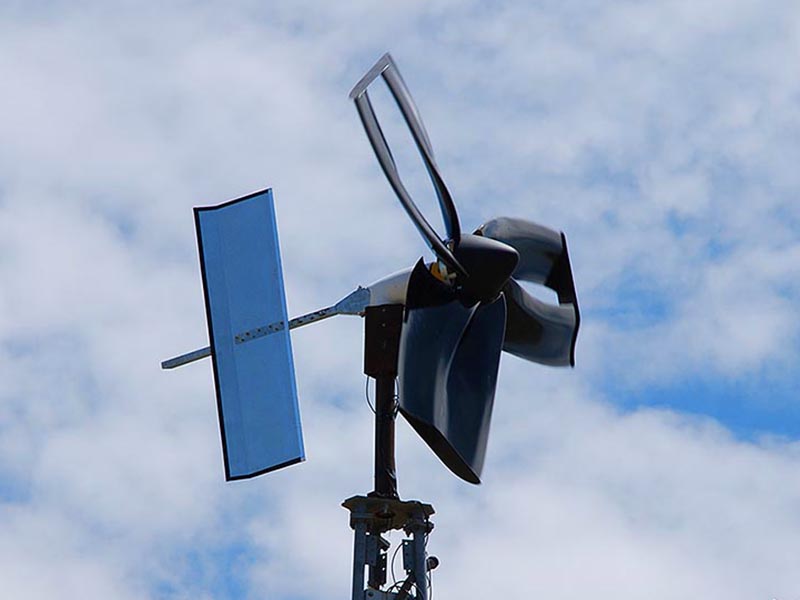
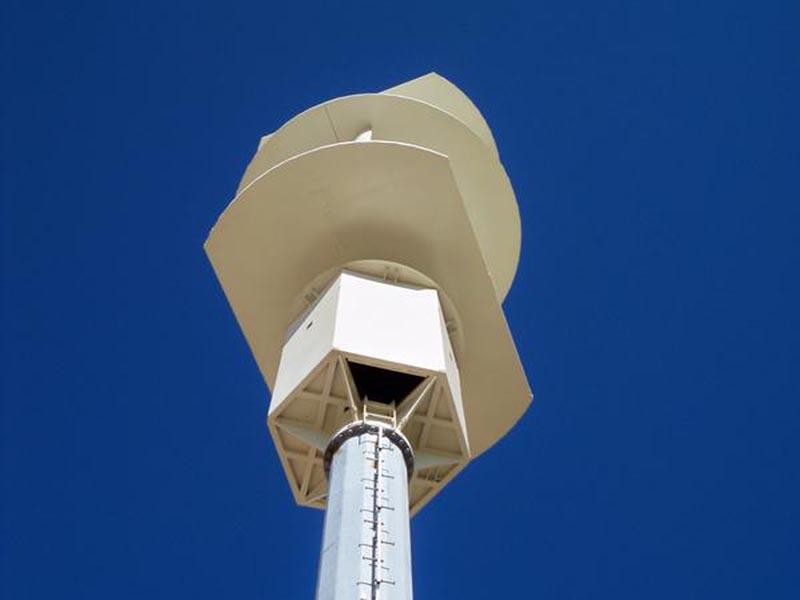
SkyDrill VAWT & Hi-Q Wind Turbine, being tested at West TX A&M Alternative Energy Institute. Wind Turbine performance was recorded during the tests.
SkyDrill
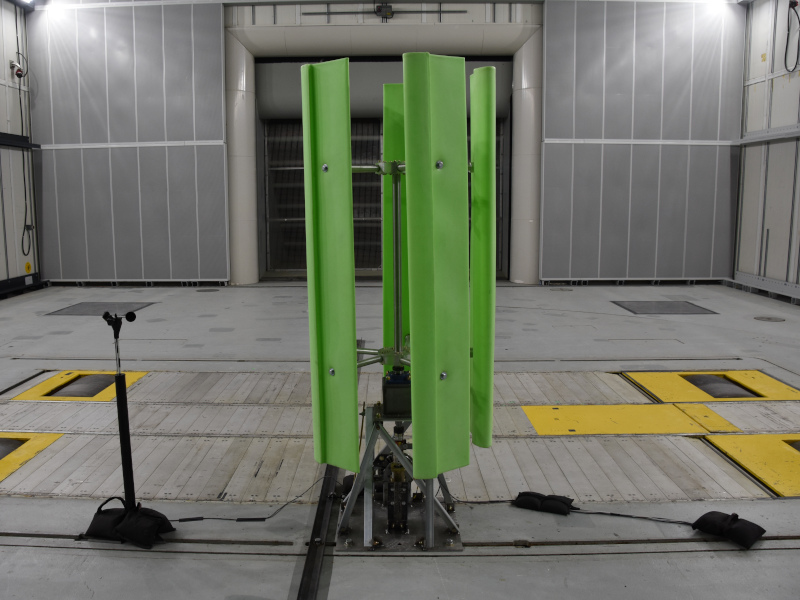
SkyDrill Vertical Axis Wind Turbine was tested in the Walter H. Beech Wind Tunnel at the Wichita State University.
Hi Q
Installation of the SkyDrill Vertical Axis Wind Turbine Prototype at the West TX A&M Alternative Energy Institute.
Generator
500 Watt Generator mounted on the top of the wind tunnel test section for a wind turbine test.
Hi-Q
Composite blade skins were fabricated and assembled for field testing.
Graph
STL model of a scaled Bergey Wind Turbine.
  • DARcorporation was involved in the aerodynamic design, structural design and prototype testing of the Hi-Q wind turbine which is an unconventional horizontal axis wind turbine. Blade Element Momentum (BEM) methods were adopted to analyze the design, methods were programmed and an in-house code was developed to analyze the performance of the wind turbine. A series of case studies was conducted with varying geometric parameters of the wind turbine. The performance in each case was carefully studied and the turbine design was optimized. Computational Fluid Dynamics (CFD) cases were simulated to verify the BEM code developed. There was good correlation between the results of the BEM code and CFD. Separate CFD cases were analyzed to extract the loads acting on the blades. These loads were used in the structural analysis of the blades. Finite Element models were created in Femap to analyze the wind turbine blades. NEi Nastran was used to analyze the models. Layup schedules for the composite blades were determined based on the loads extracted from the CFD simulations. The wind turbine blades were fabricated, using carbon fiber layup schedules based on the Finite Element analysis.

  • DARcorporation was involved in the aerodynamic and structural design and prototype testing of the SkyDrill Power Systems Vertical Axis Wind Turbine (VAWT). Because a VAWT is designed to turn at much lower rpm’s, they will produce energy at lower wind speeds and are more acceptable for urban areas where noise pollution is a concern. Two-Dimensional Computational Fluid Dynamics (CFD) analysis was conducted on various blade profiles to see which profile yielded a better performance. After the blade profile analysis, a series of Three-Dimensional CFD cases were analyzed and studied. The performance parameters were extracted from the results of these CFD cases. Finite Element models were created with load cases from CFD analysis. Normal modes and frequency response of the structure was analyzed using NEi Nastran and Femap.

  • DARcorporation engineers were involved with the aerodynamic and structural design of the Wind Energy Corporation Windy II Vertical Axis Wind Turbine (VAWT). Two-Dimensional Computational Fluid Dynamics (CFD) trade studies were conducted to see the effect of number of blades and the profile of the blades. Three-Dimensional CFD cases followed the Two-Dimensional CFD analyses. The performance characteristics were extracted from the Three-Dimensional CFD runs. DARcorporation engineers tested a scaled model of the wind turbine in the wind tunnel at the University of Kansas. The results were post processed and scaled up to the full scale. DARcorporation engineers were also involved with the structural analysis of the wind turbine. A Finite Element model was created and various load cases were analyzed. Layup schedules were determined based on the results from these simulations. Normal modes and frequency response of the wind turbine along with the tower was analyzed using NEi Nastran and Femap.
Other Design & Analysis Projects Include:

  • 100 KW Horizontal Axis Wind Turbine Aerodynamic Design

  • Chance Morgan Windwheel™ 100KW Wind Turbine Aerodynamic and Structural Design and Analysis

  • Parametric Wind Turbine Blade Design in Unigraphics for Wetzel Engineering

  • Aerodynamic Performance of Wind Turbine Blades for K. Wetzel & Company

  • Design Method Development and Design of a Low-Speed Wind Turbine for Hi-Q Products

  • CFD Analysis on a Wind Turbine rotor for Dynastrosi Laboratories

  • CFD Analysis on a Vertical Axis Wind Turbine

  • Wind Turbine Performance Analysis and Structural Analysis for Wind Energy Corporation

  • SkyDrill Wind Turbine System Dynamics Structural Analysis

  • Powerwing Aerodynamic Design

  • Darrieus Design Wind Turbine

  • Novel Ducted Wind Turbine Design

  • CFD Work for a New Propeller/Wind Turbine Concept

Testing & Installation

  • SkyDrill VAWT & Hi-Q wind turbine installed and tested at West Texas A&M Alternate Energy Institution.

  • Wind Tunnel Testing on a Vertical Axis Wind Turbine for Dynastrosi Laboratories

  • Wind Tunnel Testing of Several Low Speed Horizontal Axis Wind Turbines for Hi-Q products

  • Wind Energy Corporation Wind Turbine Wind Tunnel Testing

  • SkyDrill Vertical Axis Wind Turbine Wind Tunnel Testing

  • Manufacturing of the Hi-Q #61 1KW Wind Turbine

  • Installation and Full Scale Testing of the Hi-Q #61 Wind Turbine

  • Wind Tunnel Testing of a New Propeller/Wind Turbine Concept